
Scandinavian Institute of Climate Resilience - SICR
Measuring and strengthening your climate resilience with science
Our Mission
The Scandinavian Institute of Climate Resilience (SICR) is dedicated to advancing environmental resilience through innovative, research-based solutions that enable organizations to navigate the accelerating risks of climate change with clarity and confidence.
Our mission is to transform the way resilience is understood, measured, and implemented. While sustainability discussions often focus on commitments and disclosure, SICR concentrates on adaptive capacity, structural preparedness, and long-term environmental risk mitigation. Through the development and application of our proprietary Resilience Index, we provide an independent, quantitative framework that evaluates how effectively organizations integrate climate adaptation, resource security, and environmental risk management into their core strategies.
We believe resilience must move beyond narrative. It must be measurable, comparable, and strategically actionable. By combining academic rigor with practical consulting, we translate complex climate data into clear benchmarking tools, sector comparisons, and strategic roadmaps. Our approach empowers leaders to identify vulnerabilities, allocate capital more effectively, strengthen infrastructure and supply chains, and demonstrate credible climate leadership grounded in evidence rather than aspiration.
SICR’s mission is not only to assess resilience, but to actively foster it. Through data-driven insights, policy-relevant research, and tailored advisory services, we support organizations in designing and implementing environmental solutions that enhance stability, competitiveness, and long-term sustainability. In doing so, we contribute to building a more resilient economic system capable of withstanding environmental shocks while supporting responsible growth and innovation.
Academic Collaboration & University Partnerships
At the Scandinavian Institute of Climate Resilience (SICR), collaboration with leading academic environments is a fundamental component of our service model. Our work is rooted in structured engagement with university research communities specializing in climate science, environmental governance, economics, and risk analysis. This integration of academic expertise ensures that our resilience frameworks remain scientifically rigorous, methodologically transparent, and aligned with the latest developments in environmental research.
In a context where climate risk is dynamic, systemic, and increasingly complex, resilience cannot be approached through static metrics or isolated indicators. It requires continuous refinement informed by empirical research, quantitative modeling, and interdisciplinary dialogue. Through sustained collaboration with academic partners, SICR incorporates cutting-edge scientific insights into the evolution of its proprietary Resilience Index™ and its broader advisory services.
These partnerships contribute directly to methodological development. Academic exchange strengthens the design of quantitative scoring systems, improves data validation procedures, and supports the integration of climate modeling, economic risk assessment, and governance analysis into our benchmarking tools. The result is a framework that reflects both environmental realities and institutional complexities, ensuring that resilience assessments are robust, comparable, and analytically defensible.
Beyond methodology, academic collaboration enhances the depth of our applied research projects. By connecting research expertise with corporate and institutional needs, SICR facilitates projects that translate theoretical knowledge into operational strategies. This includes the development of sectoral resilience analyses, resource security assessments, climate adaptation roadmaps, and comparative studies of regulatory and economic exposure to environmental risk.
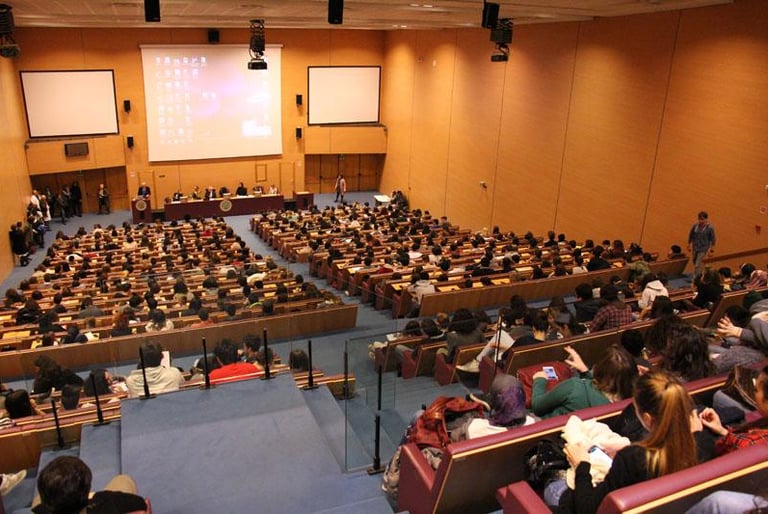
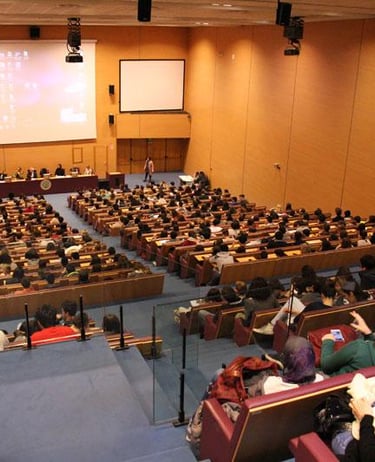
Engagement with university research communities also reinforces our commitment to intellectual integrity. Peer dialogue, research dissemination, and interdisciplinary exchange create a culture of critical evaluation that strengthens the transparency and credibility of our work. In an environment where sustainability claims are increasingly scrutinized, independent academic grounding provides an additional layer of assurance for clients and stakeholders.
Through this research-driven model, SICR bridges the gap between academic excellence and strategic execution. Our services are not built solely on consultancy practice; they are shaped by ongoing scholarly engagement that ensures resilience strategies are informed by evidence, validated through research, and designed for long-term systemic impact.
By embedding academic collaboration into our operational structure, SICR ensures that resilience is not treated as a conceptual aspiration but as a measurable, scientifically grounded standard for organizations seeking durable environmental and economic stability.

Dissemination of Knowledge - the International Journal of Climate Resilience (IJCR)
The Scandinavian Institute of Climate Resilience (SICR) is launching the establishment of the International Journal of Climate Resilience (IJCR) - a peer-reviewed academic journal dedicated to advancing research on environmental resilience, climate adaptation, and sustainable economic transformation.
The IJCR serves as an interdisciplinary platform bringing together scholars, policymakers, and practitioners working at the intersection of climate science, environmental governance, economics, infrastructure resilience, and strategic risk management. The journal’s objective is to foster rigorous, policy-relevant research that moves beyond descriptive sustainability narratives and contributes to measurable, solution-oriented resilience frameworks.
IJCR publishes original research articles, comparative sector analyses, methodological innovations, policy reviews, and applied case studies addressing themes such as climate risk modeling, adaptation finance, water and resource security, infrastructure preparedness, regulatory transformation, and resilience benchmarking. Special issues will focus on emerging topics including geopolitical dimensions of climate risk, systemic environmental vulnerability, and quantitative resilience metrics.
The journal will operate under a strict double-blind peer review process to ensure scientific integrity, transparency, and academic excellence. An international editorial board composed of leading scholars and practitioners guides its strategic direction and thematic development.
The International Journal of Climate Resilience is pursuing inclusion in major academic indexing databases, including Scopus, with the objective of ensuring broad international visibility, citation impact, and research dissemination. Scopus indexing will position IJCR within the global academic community as a recognized platform for high-quality, peer-reviewed scholarship in climate resilience and environmental strategy.
Through the creation of IJCR, SICR aims to reinforce its commitment to bridging academic research and applied resilience practice. The journal will not only advance scholarly dialogue but also support the development of innovative methodologies and evidence-based solutions that strengthen environmental and economic stability worldwide.
Work in progress...
Our Collaborations
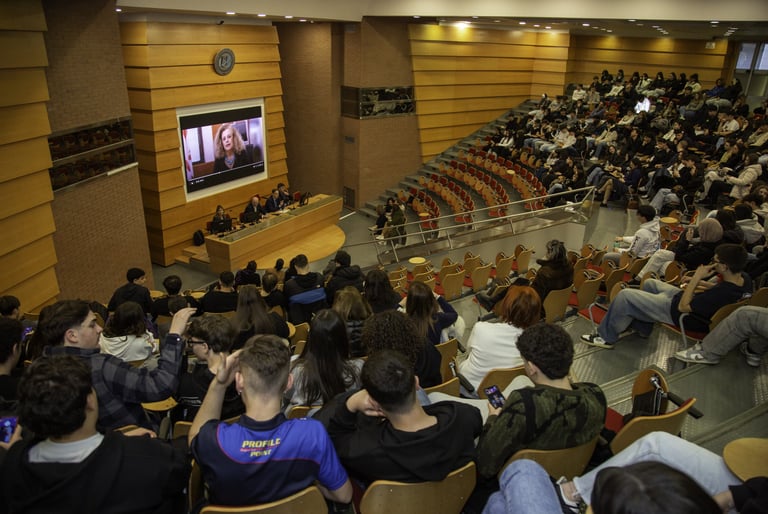
At the Scandinavian Institute of Climate Resilience we aim to have structural partnership between science and entrepreneurship, between theory and practice. Our work is built upon a dynamic interconnection between academic institutions and forward-looking stakeholders, creating a bridge between research excellence and practical implementation. By integrating universities and industry actors into a shared resilience ecosystem, SICR ensures that environmental solutions are scientifically grounded, economically viable, and operationally actionable.
Academic Partners
SICR collaborates with leading academic institutions that, over the years, have demonstrated a strong commitment to developing proactive solutions for environmental and water management at national, international, and local levels.
Lund University has long been recognized for its interdisciplinary research on sustainability transitions, water governance, and environmental systems. Its academic environment promotes evidence-based policy design and innovative approaches to managing climate-related risks, particularly within European and Nordic contexts.
University of Auckland contributes a global and Pacific-oriented perspective on environmental resilience, climate adaptation, and resource management. Through its research initiatives, the university has supported proactive environmental governance frameworks that integrate ecological protection with economic development strategies.
Yerevan State University has consistently advanced research and policy engagement on environmental sustainability and water resource management within complex regional contexts. Its work reflects a commitment to proactive environmental planning that addresses both local ecosystem preservation and broader international cooperation challenges.
Through collaboration with these academic institutions, SICR strengthens the scientific foundation of its resilience methodologies. The exchange of research insights, data analysis, and interdisciplinary dialogue ensures that our benchmarking tools and strategic advisory services are aligned with evolving environmental knowledge and grounded in rigorous scholarship.



Strategic Stakeholders
Complementing our academic partnerships, SICR works alongside innovative private-sector actors committed to advancing proactive environmental management strategies.
Aegir Resilience, a Sweden-based company, focuses on developing adaptive strategies that enhance climate preparedness, water security, and sustainable infrastructure planning. Its operational expertise supports the translation of resilience frameworks into tangible strategic action within industrial and institutional settings.
Geosol, based in Italy, brings experience in environmental management, resource optimization, and sustainable operational design. The company’s proactive approach to environmental risk mitigation aligns with SICR’s emphasis on anticipating and addressing recurring ecological challenges before they escalate into systemic crises.
AI Bridge Tech, based in New Zealand, contributes technological innovation and digital integration capabilities. By leveraging advanced analytics, data infrastructure, and artificial intelligence solutions, the company supports the digitalization of resilience metrics and the development of scalable monitoring systems. Its expertise enhances the precision, automation, and technological adaptability of resilience benchmarking tools.


Bridging Research and Implementation
The interconnection between universities and stakeholders is central to SICR’s identity. Academic partners contribute theoretical depth, empirical research, and methodological innovation. Stakeholders contribute operational experience, market understanding, and implementation capacity. Together, they form a collaborative ecosystem where knowledge informs practice and practice refines knowledge.
This integrated model ensures that resilience is not treated as a conceptual ambition, but as a measurable and implementable standard. By aligning academic insight with industry-driven strategy, SICR fosters environmental solutions that are proactive, scalable, and capable of strengthening climate stability, economic development, and ecosystem integrity over the long term.